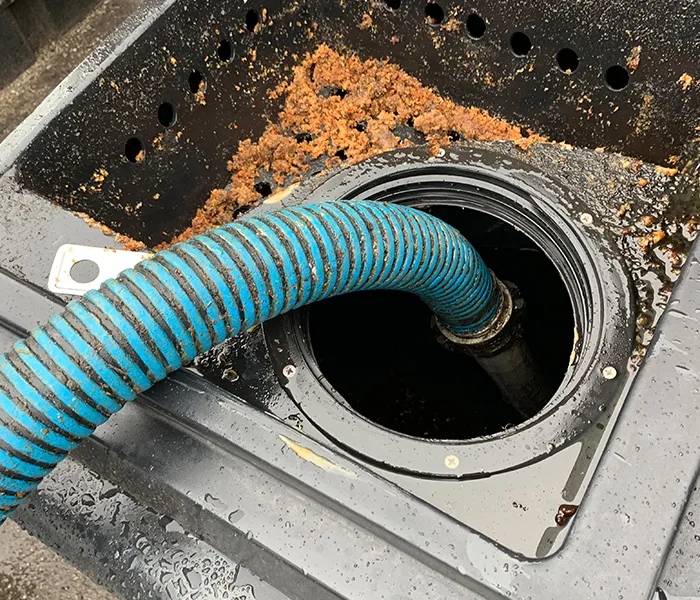
A busy restaurant depends on its kitchen plumbing. When a grease trap or interceptor becomes overloaded, the result can be slow drains, foul odors, wastewater backups, regulatory violations and an unexpected interruption to service.
So, how often should an Indiana restaurant have its grease trap cleaned?
The answer depends on the type and size of the interceptor, the amount of fats, oils and grease your kitchen produces, manufacturer instructions and local sewer regulations. For food-service establishments within Evansville, the current local requirements provide a more specific answer:
- Outdoor gravity grease interceptors: At least once every three months
- Indoor hydromechanical grease interceptors: At least once every month
- Either type: Sooner when grease and solids reach 25% of the unit’s total capacity
Restaurants outside Evansville should confirm the requirements of their local sewer utility or wastewater authority. A standard three-month schedule may not be frequent enough for every kitchen.
What Does a Grease Trap Do?
A grease trap or interceptor is installed between commercial kitchen drains and the sanitary sewer system. It slows the flow of wastewater so fats, oils and grease, commonly called FOG, can separate from the water.
Grease generally rises to the top while heavier food solids settle to the bottom. The remaining wastewater flows toward the sewer.
The Indiana Department of Environmental Management explains that accumulated FOG can contribute to blocked drainpipes, sewer backups and problems at wastewater treatment facilities. Periodic removal protects both the restaurant’s plumbing and the larger wastewater system.
A grease interceptor does not make grease disappear. It temporarily stores FOG and solids until they are professionally removed and disposed of.
Grease Trap vs. Grease Interceptor
The terms are often used interchangeably, but restaurants may have one of two main systems.
Hydromechanical Grease Interceptor
An HGI is often installed indoors near sinks and other grease-producing fixtures. These units are generally smaller and have less storage capacity, so they require more frequent cleaning.
They were traditionally called grease traps, and many kitchen employees still use that term.
Gravity Grease Interceptor
A gravity grease interceptor is a larger tank typically installed underground outside the building. It receives wastewater from connected kitchen fixtures and holds a larger volume of FOG and solids.
A larger tank does not mean it can be ignored indefinitely. It must still be completely pumped and cleaned on a recurring schedule.
Evansville Grease Interceptor Cleaning Requirements
The current Evansville Water and Sewer Utility FOG policy requires food-service establishments to maintain their grease-removal systems and provides separate minimum schedules for indoor and outdoor equipment.
| Interceptor type | Evansville minimum cleaning frequency | Clean sooner when |
| Outdoor gravity grease interceptor | Every three months | FOG and solids exceed 25% of total capacity |
| Indoor hydromechanical grease interceptor | Every month | FOG and solids exceed 25% of total capacity |
| Oil and water separator | Every six months | More frequent service is needed to prevent carryover |
These are minimum requirements, not automatic recommendations for every kitchen. EWSU may require more frequent service if an interceptor is undersized, poorly maintained or allowing grease to pass into the sewer system.
A high-volume restaurant may reach the 25% threshold long before the next scheduled cleaning date.
Understanding the 25% Rule
A grease interceptor becomes less effective as grease and solids occupy more of its working capacity.
The 25% rule means the combined floating grease and settled solids should not exceed one-quarter of the interceptor’s total capacity. Once that point is reached, there is less room for wastewater to slow down and separate properly.
This increases the risk of grease passing through the outlet and entering downstream pipes.
A restaurant should not wait for exactly 25% accumulation if it is already experiencing:
- Slow drainage
- Grease passing through the outlet
- Strong odors
- Frequent kitchen clogs
- Wastewater backups
- An overflowing interceptor
If your tank consistently reaches the threshold before its scheduled service, shorten the cleaning interval.
What Determines Your Restaurant’s Cleaning Schedule?
Two restaurants with the same interceptor size may need different service frequencies. The right schedule depends on how the kitchen operates.
Menu and Cooking Methods
Restaurants that fry large amounts of food or prepare meat, gravy, sauces and dairy-heavy dishes generally produce more FOG.
A coffee shop or bakery may generate less grease than a fried-chicken restaurant, but it can still produce oils, butter, frosting, dairy residue and food solids that collect in the system.
Number of Meals Served
Higher customer volume usually means more dishes, more wastewater and more grease entering the interceptor.
Seasonal changes also matter. A restaurant may need more frequent service during festivals, holiday periods or tourist seasons.
Interceptor Size
A properly sized interceptor provides enough capacity for wastewater to slow down and allow separation. An undersized unit may fill quickly or permit grease to pass through.
If your restaurant repeatedly needs emergency cleaning, equipment sizing should be evaluated.
Kitchen Practices
Scraping plates into the trash, using sink strainers and storing fryer oil separately can reduce the amount of material entering the interceptor.
Poor practices, such as washing food scraps and cooking oil down a drain, cause much faster accumulation.
Condition of the System
Damaged baffles, missing components, corrosion and deteriorating concrete can interfere with performance even when the unit is pumped regularly.
Local Requirements
Indiana restaurants must follow applicable state and local rules. Local sewer utilities may set minimum frequencies, inspection requirements and recordkeeping standards that differ by jurisdiction.
Signs Your Grease Trap Needs Cleaning Now
Do not wait for your recurring appointment if the system shows signs of trouble.
Slow Kitchen Drains
A sink that drains slowly may indicate grease buildup in the interceptor, connected piping or lateral line.
Foul Odors
Strong grease, sewage or rotten-food odors can develop as trapped organic material decomposes.
Grease in Downstream Lines
Visible grease leaving the interceptor suggests that the system is too full, damaged, overloaded or not separating waste properly.
Recurring Clogs
Repeated backups in floor drains, sinks or dishwashing areas may indicate that FOG is restricting the plumbing.
Overflow or Standing Wastewater
An overflowing interceptor or wastewater backing into the kitchen requires immediate attention. It can create sanitation concerns and may force the kitchen to stop operating.
The Unit Reaches 25% Capacity
Even if no symptoms are present, the interceptor should be serviced when floating FOG and settled solids reach the applicable threshold.
What Should Professional Grease Trap Cleaning Include?
Grease trap maintenance should involve more than removing the floating layer from the top.
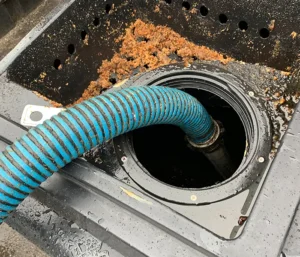
The Evansville policy requires interceptors to be completely pumped during each cleaning event. Floating material, wastewater, bottom sludge and solids must be removed. The interior surfaces should then be scraped so remaining residue does not reduce capacity.
Hydromax grease trap cleaning may include:
- Complete evacuation of the interceptor
- Scraping and cleaning walls and baffles
- Pressure washing
- Grease lateral jetting when needed
- Water-flow testing
- System-condition inspection
- Photo documentation
- Automatic service reports
- A service checklist
- Compliant waste manifests
Hydromax can also provide recurring maintenance programs, appointment reminders and service during non-peak hours to reduce interference with restaurant operations.
Grease Trap Records Indiana Restaurants Should Keep
Cleaning the equipment is only part of compliance. Restaurants also need documentation showing when the work was performed and how the waste was handled.
For Evansville food-service establishments, the maintenance log should document:
- The cleaning date
- The company that performed the service
- The grease hauler’s manifest number
- The amount of waste removed
- The disposal location
The local policy requires the maintenance log to remain available on the premises. Trip tickets and manifests must be maintained for three years under the Evansville policy.
At the state level, IDEM oversees requirements for pumping, transporting, storing, treating and disposing of grease-trap waste. Its fact sheet states that certain permitting and recordkeeping documentation must be retained for five years.
Because different documents may have different retention requirements, restaurant owners should follow the longest period that applies and confirm expectations with the appropriate regulatory agency.
Can Restaurant Employees Clean the Grease Trap?
Employees may perform limited maintenance on certain small units if permitted by the manufacturer and local authority. However, large interceptors generally require professional pumping equipment and compliant transportation and disposal.
Evansville requires waste to be removed by a properly permitted or registered transporter. The hauler must provide a manifest containing details about the service and disposal.
Trying to save money by removing only the top layer or using an unqualified hauler can leave sludge behind, reduce the interceptor’s capacity and create documentation problems during an inspection.
Can Grease-Dissolving Additives Replace Cleaning?
No.
Products that claim to dissolve, liquefy or break down grease do not eliminate the need for pumping. Some may temporarily push grease farther into the plumbing or municipal sewer system.
Evansville’s FOG policy prohibits additives such as concentrated detergents, emulsifiers, enzymes, degreasers and solvents when they liquefy or interfere with the separation of grease-interceptor waste.
When the tank is full, the correct solution is complete evacuation, cleaning, inspection and lawful disposal.
How to Reduce FOG Between Cleanings
Good kitchen practices can help the interceptor function properly between professional services.
Train employees to:
- Scrape plates and cookware before washing
- Place food solids in trash or compost containers
- Keep drain screens in place
- Wipe grease from pots and pans before rinsing
- Store used fryer oil in a designated covered container
- Never pour cooking oil into a sink or floor drain
- Report slow drains and odors immediately
- Avoid sending concentrated chemicals into the interceptor
- Keep access covers unobstructed for service
A grease interceptor is the last line of defense, not a substitute for responsible kitchen practices.
Grease Trap Cleaning and Used Cooking Oil Are Different Services
Grease-trap waste is the mixture collected from kitchen wastewater. Used cooking oil is the fryer oil intentionally removed from cooking equipment.
Used fryer oil should never be poured into the grease interceptor. It should be stored in an appropriate container for separate collection and recycling.
Hydromax provides used cooking oil collection with service schedules based on a business’s storage capacity and fryer-oil volume.
Restaurants that need both services can ask about the Hydromax Bundle & Save program, which combines grease-trap pumping with used cooking oil collection through one provider.
Build a Schedule Around Your Kitchen
The safest cleaning schedule is based on actual accumulation, not guesswork.
Start with the minimum frequency required by your local authority. Then review service reports to determine how full the unit is at each visit. If it repeatedly approaches 25% capacity, schedule service more often.
A restaurant that begins with quarterly outdoor-interceptor cleaning may discover that every two months is more appropriate. A high-volume fried-food operation may need monthly service even with a large exterior tank.
A customized recurring schedule helps prevent emergencies while avoiding unnecessary service.
Schedule Restaurant Grease Trap Cleaning in Indiana
Hydromax Services provides grease trap cleaning, pump-truck services and used cooking oil collection for restaurants, schools, hotels, healthcare facilities, commissary kitchens, churches, casinos and other food-service operations.
With full evacuation, system inspections, service documentation and recurring scheduling, Hydromax helps restaurant owners protect their plumbing and stay prepared for regulatory inspections.
Call (812) 925-3930 to request an estimate or create a customized grease-maintenance program. Hydromax also provides 24/7 emergency grease-trap service.
Frequently Asked Questions
Evansville requires outdoor gravity grease interceptors to be cleaned at least once every three months or sooner when FOG and solids exceed 25% of the unit’s capacity.
Evansville’s current policy requires hydromechanical grease interceptors to be cleaned at least monthly or sooner if they exceed the 25% threshold.
No. Local sewer utilities may establish different schedules and maintenance requirements. Confirm the rules that apply to your restaurant’s location.
No. Odor means the unit may already be overdue for service. Cleaning should follow the required schedule and measured accumulation level.
FOG and solids can cause odors, restricted flow, kitchen backups, downstream sewer blockages and regulatory violations. Severe problems may interrupt restaurant operations.
Yes. Proper cleaning includes removing floating grease, wastewater and bottom solids. The walls, top, bottom and internal components should also be cleaned and inspected.
Used fryer oil should be stored in an appropriate covered container for collection or recycling. It should never be poured into a drain or grease interceptor.